29/11/17 – DREAMINGMACHINE.com – VOICE OF FREEDOM: TRAFFICKED WOMEN SPEAK

6

Link: VOICE OF FREEDOM: TRAFFICKED WOMEN SPEAK – Leila Segal

29/11/2017

The media loves a tragic story. What fits less well with its usual narrative is the idea of a trafficked person as an equal: someone who, but for poverty and geography, might be a friend.

This October, Voice of Freedom worked in Asti, at the Piam Onlus shelter, with 10 women who had been trafficked from Nigeria, through the brothels and prisons of Libya, via terrifying journeys across the sea in boats hardly worthy of the name, into Italy where contrary to their expectations of a job such as beautician, hairdresser or jewellery-maker, they were set to work as prostitutes on the street. Any woman who refused might be starved, certainly would be beaten; if she managed to escape from her trafficker, the woman would have to sleep on the street, penniless, undocumented, and longing for those she had left at home.

Into these women’s hands, Voice of Freedom placed cameras and asked them to think about the messages they wanted to send into the world. In two intensive weeks, women and facilitators created a group where trust was key. The women, from different tribes and regions of Nigeria, discussed together how they had been trafficked, the effects of poverty and women’s inequality, and the deception of the people—traffickers who had brought them there.

The women began to consider themselves as a body—to externalize individual suffering into a wider message. This was no longer simply about personal tragedy and survival: their experiences became part of a structure, a larger whole, and began to have meaning, which they defined.

We considered the concept of ‘advocacy’, and explained that through this work, if the women chose, they could advocate for their and their communities’ needs. Media is powerful: The tool was now in their hands.

Each woman in the group took to the work. We visited World Press Photo exhibition in Turin, where for the first time they saw the power of media to communicate experiences such as theirs. Then they decided they could do it better, because they were the ones who had had those experiences: the stories were theirs to tell.

We witnessed what happens when a woman who has not had a chance to speak her own truth does it for the first time—the dignity and power of their work, in contrast to the artificiality of documentation by those on the outside.

With the women’s permission, Voice of Freedom will share this photography with anti-trafficking campaigners and lawmakers. We also plan to exhibit it in Italy, the UK and beyond. In it, you see each woman as a whole person, with a whole life—a before. She is more than just the sum of her trafficking experiences—the work humanizes. We see through her eyes and understand that she is the best communicator of a life unknowable in any other way. Empathy arises through listening, not objectification, which can trigger in the viewer pity, or, through a sense of powerlessness, a turning away and disgust.

So here is a small selection of the women’s work, with its unexpected perspectives and utterly compelling detail that draws us close, as if listening to a trusted friend.


Leila Segal is director of Voice of Freedom

The following photographs were created by women on the Voice of Freedom workshops at Piam Onlus shelter, Asti, in October 2017. Each picture is followed by the words of the woman who took it. Workshops were facilitated by Leila Segal and Liz Orton.

Gloria
2 

Photo: Gloria, courtesy of Voice of Freedom

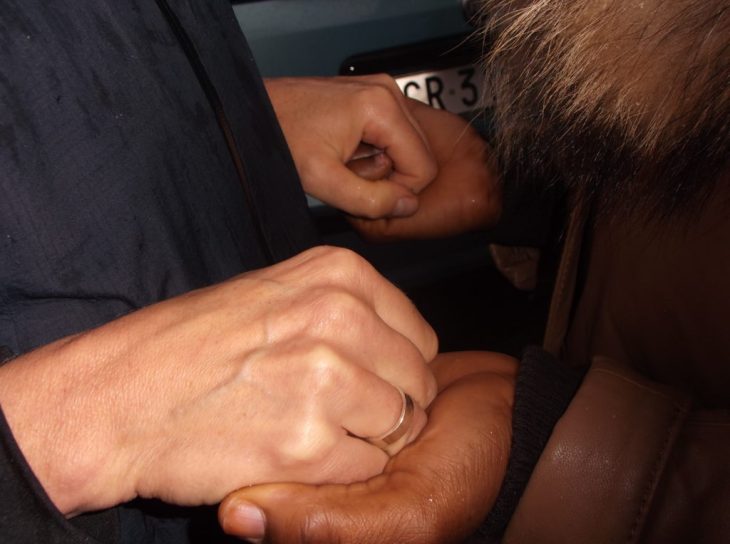
‘Many of us, and almost all of us, have passed through too many temptations in life, too many struggles and trials—the trip here, how difficult it is. Libya is hell… the sun… we are in prison. But being out of that Libya is to testify that we are now free from that place. So I took this picture as a bond of consolation. We were trafficked, and the anti-traffickers giving us the hope that they are going to deal with these issues.

‘And we are here. Like me, I’m in Europe now. I’m going to see a place to live. Maybe somebody’s going to feed me and accommodate me, and giving me some pocket money and shelter. I took a picture of a white person and a black person. The white person is comforting the black person and these are the people who are helping. So that’s my feeling.’

Sarah Oluwatimileyin 
3

Photo: Sarah Oluwatimileyin, courtesy of Voice of Freedom

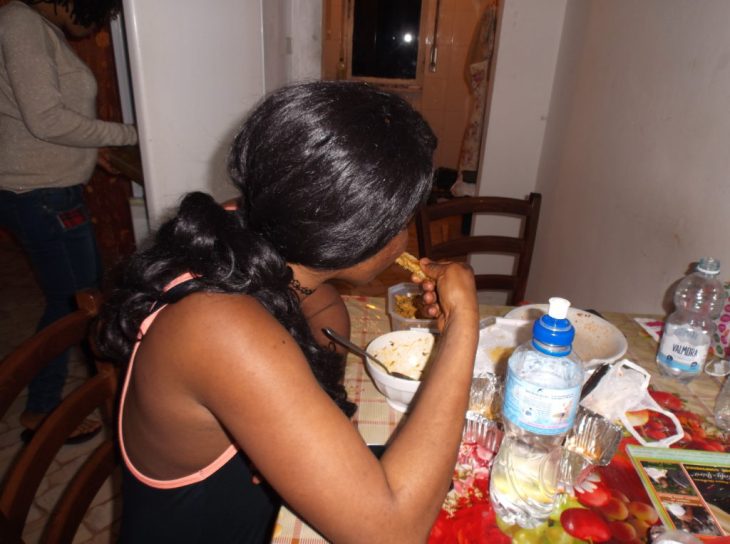
‘I love this picture because whenever I look at her personally I look at her as my childhood friend. There is a friend like that, not she, but they look alike so much. We were brought up together, her name is Dami. The church I attend, her dad is the owner of the church, my dad is the second in charge of the church and that is how they brought us together when we were two years old.

‘Later, her mum and dad broke up and her mum left and her dad married another wife who started maltreating them. Suddenly Dami just got missed—they were like, “Dami has travelled, travelled to abroad,”—this and that. Meanwhile, later we find out that they took her to one village for slavery—her dad sold her for slavery so she can bring money. There was no money so that is why they sold the girl.’

Emmanuel Joyce

Photo: Emmanuel Joyce, courtesy of Voice of Freedom

‘I took this picture when I woke up in the morning. On the other side it is houses. I open the windows, tidying everywhere, because in Nigeria we don’t have curtains and we don’t have windows. We have iron window and even if you want to look outside you can’t. You just peep like this. It’s iron bars. I took this picture to remember my background. There is even those houses around the back. We don’t have that in our village, there are many bushes around. I am on the ninth floor here—where I live in the village is just an ordinary house, there are no steps.’

Stefan 
5

 Photo: Self-portrait, Stefan, courtesy of Voice of Freedom

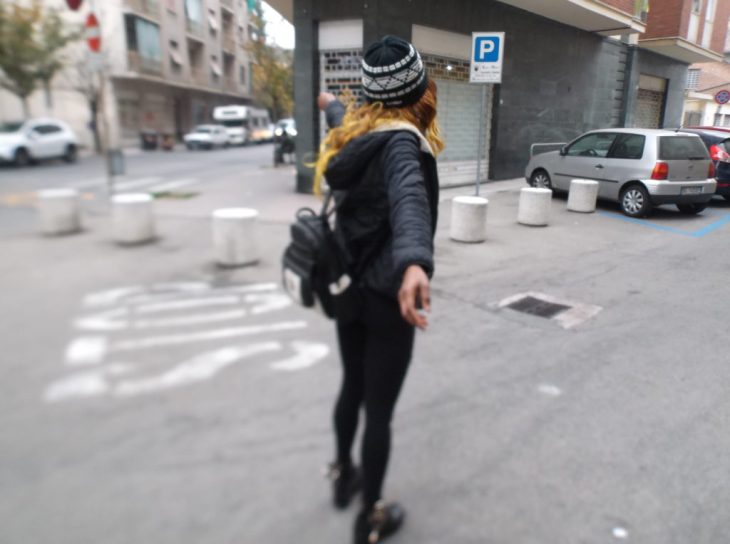
‘The colour I’m wearing is black. It’s a mourning colour. In the week I snapped this picture I was mourning my mum and up to now I’m still with the black. I promised I was never going to leave my family. I did everything I did because I have this heart, I want to help.

‘In this picture I’m looking forward, looking ahead at what I’m going to be, and achieve greater things. But my right hand is behind, reaching back for my family, people who need help. Reaching back, there is nothing to touch, there is nothing to hold. The way is still very far back: my hand is empty, because I still have a lot to do. I want to be, “mummy don’t worry, I’m going to buy you the best car.” It’s so painful, me reaching back for that woman I looked at and I smiled. ‘

Okungbowa Osamude

6

Photo: Okungbowa Osamude, courtesy of Voice of Freedom

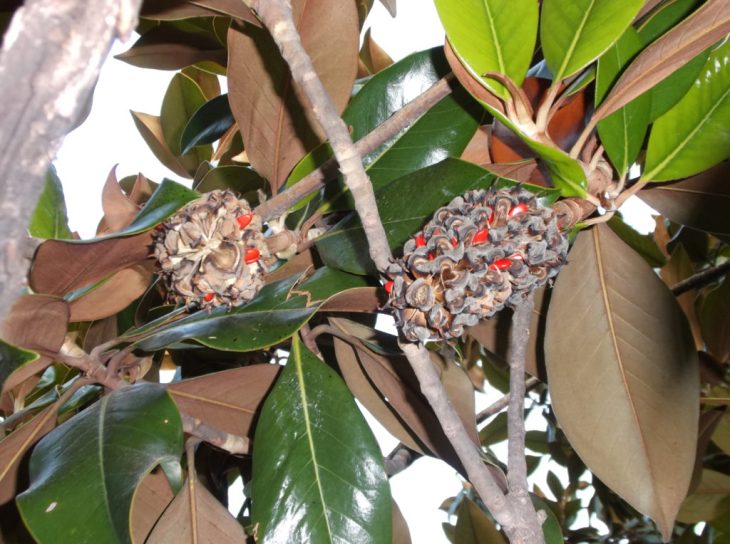
‘I took this picture because the fruit inside was very sharp and made me to snap it. This picture reminds me of dry bones coming back to life, dead things coming back to life, things that are forgotten coming back to life—things that are not supposed to be. Now it’s bringing itself back because the tips of the leaves are brown… the brown ones are coming back to life. The green ones, they are ready to enjoy the fruit of life; the fruit now is showing the beautiful of the tree. Fruit has life.’

Greatness 
7

Photo: Self-portrait, Greatness, courtesy of Voice of Freedom

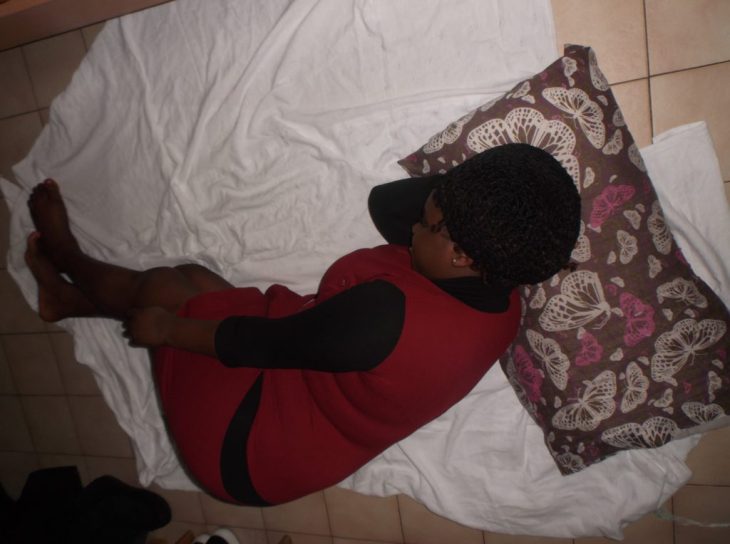
‘In desert there is no house. You can’t see house in desert. We just sleep outside. Back then they would load us like 50, 20, in the Helios [truck]. There would not be space for you to stand or move. So anybody that fall down they are not going to wait for him, that person will just die there. Because of the sand there is no water, no food. We spent the nights on the sand, it was very very cold.

‘Back home in Nigeria the sand is very good. There is no cold, no hot. Very good. We do spread clothes on it, and sleep on it. We don’t need to go inside because the sand will be okay.’


07/11/17 – THE GUARDIAN – Arrests in Italy as 26 Nigerian women and girls found dead

4928

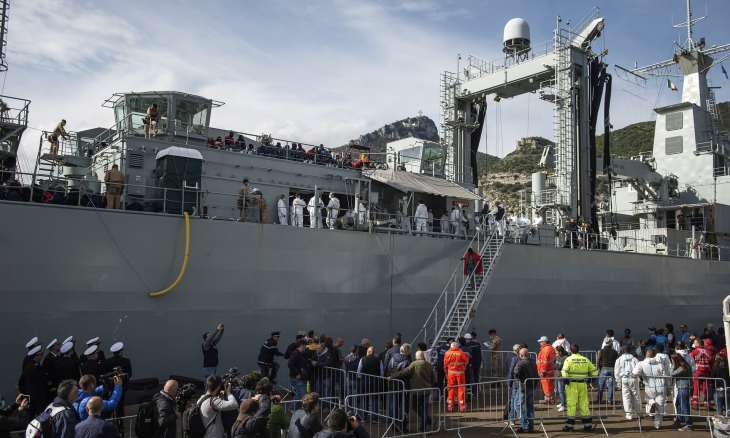
Rescued migrants disembark from the Spanish navy ship Cantabria in Salerno, Italy. Photograph: Antonio Masiello/Getty Images

Link: Arrests in Italy as 26 Nigerian women and girls found dead 

07/11/2017

by: Angela Giuffrida

Two men have been arrested and charged in Italy as investigators look into the deaths of 26 Nigerian women and girls, who are suspected to have been murdered while attempting to cross the Mediterranean.

The bodies of the women were brought to the southern Italian port of Salerno by the Spanish ship Cantabria on Sunday, and prosecutors opened an investigation over suspicions that the women, some as young as 14, may have been abused and killed.

The bodies were recovered by Cantabria, which works as part of the EU’s Sophia anti-trafficking operation, from two separate shipwrecks – 23 from one and three from the other. Fifty-three people are believed to be missing.

The men arrested have been named as Al Mabrouc Wisam Harar, from Libya, and Egyptian Mohamed Ali Al Bouzid.

The pair are believed to have skippered one of the boats. They were identified by survivors who were among the 375 brought to Salerno by Cantabria.

The two men are accused of organising and trafficking at least 150 people on the two sunken boats, but prosecutors have not made a direct link between the two men and the women’s deaths, said Rosa Maria Falasca, chief of staff at Salerno’s prefecture.

Autopsies on the bodies should be completed over the next week.

The prefect of Salerno, Salvatore Malfi, told the Italian press that the women had been travelling alongside men and when the vessels sank, “unfortunately, the women suffered the worst of it”.

But in response to concerns that the women were being trafficked for the sex trade, he added: “Sex trafficking routes are different, with different dynamics used. Loading women on to a boat is too risky for the traffickers, as they could risk losing all of their ‘goods’ – as they like to call them – in one fell swoop.”

Marco Rotunno, an Italy spokesman for the UN refugee agency (UNHCR), said his colleagues were at the port in Salerno when the bodies were brought in.

“It was a very tough experience,” he said. “One lady from Nigeria lost all her three children.”

He added that 90% of migrant women arrive with bruises and other signs of violence.

“It’s very rare to find a woman who hasn’t been abused, only in exceptional cases, maybe when they are travelling with their husband. But also women travelling alone with their children have been abused.”

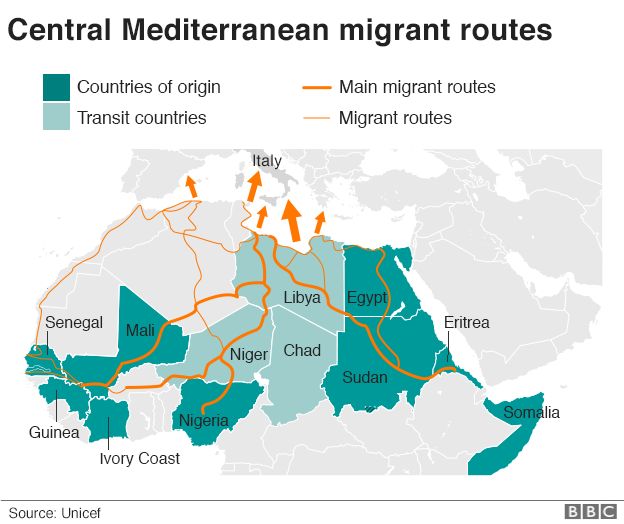
Most of the survivors were either Nigerian or from other sub-Saharan countries including Ghana, Sudan and Senegal.

The survivors were among over 2,560 migrants saved over four days. People still continue to attempt the crossing despite a pact between Italy and Libya to stem the flow, which led to a drop in arrivals by almost 70% since the summer, according to figures released last week by Italy’s interior ministry.


6/11/17 – BBC-Italy probes deaths of 26 Nigerian women from migrant boats

Map showing Central Mediterranean migrant routes

Link: Italy probes deaths of 26 Nigerian women from migrant boats

6/11/2017

Italian prosecutors are investigating the deaths of 26 Nigerian women – most of them teenagers – whose bodies were recovered at sea.

There are suspicions that they may have been sexually abused and murdered as they attempted to cross the Mediterranean.

Five migrants are being questioned in the southern port of Salerno.

A Spanish warship, Cantabria, docked there carrying 375 migrants and the dead women, following several rescues.

Twenty-three of the dead women had been on a rubber boat with 64 other people.

Italian media report that the women’s bodies are being kept in a refrigerated section of the warship. Most of them were aged 14-18.

Most of the 375 survivors brought to Salerno were sub-Saharan Africans, from Nigeria, Senegal, Ghana, The Gambia and Sudan, the daily La Repubblica reports.

Among them were 90 women – eight of them pregnant – and 52 children.

There were also some Libyan men and women on board.

People-smuggling gangs charge each migrant about $6,000 (£4,578) to get to Italy, $4,000 of which is for the trans-Saharan journey to Libya, according to the Italian aid group L’Abbraccio.

Many migrants have reported violence, including torture and sexual abuse, by the gangs.

In the year to 1 November, 150,982 migrants arrived in southern Europe by boat from North Africa, the International Organization for Migration (IOM) reports.

Of them, 111,552 (nearly 75%) came via the Central Mediterranean route to Italy. The number who died on that route was 2,639, the IOM says.

The others arrived in Greece, Cyprus or Spain. The total is less than half the 335,158 who arrived in the same period of 2016.

Last year the total for Greece was higher than that for Italy.

A note on terminology: The BBC uses the term migrant to refer to all people on the move who have yet to complete the legal process of claiming asylum. This group includes people fleeing war-torn countries such as Syria, who are likely to be granted refugee status, as well as people who are seeking jobs and better lives, who governments are likely to rule are economic migrants.

05/11/17 – FATTO QUOTIDIANO – Migranti, sbarca nave a Salerno con 400 persone: 26 donne morte. Prefetto: “Ipotesi omicidi. E’ tragedia dell’umanità”


Link:Migranti, sbarca nave a Salerno con 400 persone: 26 donne morte. Prefetto: “Ipotesi omicidi. E’ tragedia dell’umanità”

05/11/17

Quasi quattrocento migranti e tra loro i cadaveri di 26 donne. La nave militare spagnola Cantabria ha attraccato questa mattina al porto di Salerno: un nuovo sbarco annunciato nelle scorse ore, ma questa volta a bordo c’erano anche ventisei donne morte che avrebbero perso la vita durante la traversata con un gommone. “E’ una tragedia dell’umanità”, sono state le prime parole del prefetto Salvatore Malfi, “credo che la procura si attiverà da subito per valutare se possa trattarsi di altrettanti omicidi”. Nelle prossime ore il pm Luca Masini salirà sulla nave con i medici legali per valutare se effettuare le autopsie sui cadaveri. Secondo le prime rilevazioni, a bordo c’erano 375 migranti: 259 uomini, 116 donne di cui 9 in avanzato stato di gravidanza. Settantadue migranti resteranno in Campania, gli altri verranno distribuiti in altre Regioni.

“Oggi Salerno”, ha continuato Malfi, “si prepara con uno spirito diverso rispetto agli altri sbarchi. Abbiamo già avuto altri morti, ma su questa nave sarà tutto più complicato, anche come impatto morale. Siamo ancor di più in stretta collaborazione con la Procura della Repubblica perché i ventisei corpi potrebbero essere ventisei omicidi. Quello che va fatto, per esigenze di giustizia, sarà fatto. Credo che già stamattina il procuratore Masini valuterà se ci siano i presupposti per un’ipotesi di omicidio. Bisogna vedere se si trova qualche soggetto su cui concentrare l’attenzione o se si procederà contro ignoti. Che qualcuno abbia fatto morire queste donne e non sia stato un fulmine arrivato dal cielo è una cosa ovvia”.

Tra le prime ipotesi c’è appunto quella che le donne siano morte per annegamento. Le autorità salernitane, che stanno effettuando accertamenti sulla vicenda, ritengono che sia ancora prematuro esprimersi sull’accaduto in modo più definito. Malfi ha spiegato: “Le donne decedute, di nazionalità presumibilmente nigeriana, sembra fossero a bordo di un gommone dove vi erano anche uomini. Il barcone è affondato e le donne purtroppo hanno avuto la peggio, in quanto soggetti più deboli”. Il prefetto tenderebbe a escludere collegamenti con la tratta delle donne: “Le tratte seguono altre dinamiche e altri canali. Caricare le donne su un barcone sarebbe un investimento rischioso che i signori delle tratte non farebbero, potendo perdere la ‘merce’, come la chiamano loro, in un solo colpo”.

Tutte le salme verranno trasportate all’obitorio dell’ospedale di Salerno per un primo esame esterno, oltre che per un tampone, per scoprire se le donne morte abbiano anche anche subito violenze. In base agli elementi raccolti, il professor Antonello Crisci, perito della Procura, insieme alla sua equipe, valuterà se procedere con le autopsie. Una volta ultimati tutti gli accertamenti, nove cadaveri verranno sepolti nel cimitero del Comune di Salerno e i restanti nei comuni limitrofi.

Silenzio per il momento da governo e istituzioni. All’attacco solo la Lega Nord che denuncia la ripresa degli sbarchi: “400 immigrati (26 morti) sbarcati a Salerno”, ha scritto su Twitter il segretario del Carroccio Matteo Salvini. “Quanti altri morti e quanti altri miliardi sprecati? Altro sangue sulla coscienza dei buonisti”. Così anche il deputato leghista Paolo Grimoldi: “Nel silenzio del governo, mentre il ministro Minniti era distratto a rilasciare interviste trionfalistiche sul drastico calo estivo degli sbarchi, gli arrivi di immigrati dall’Africa sono ripresi improvvisamente. Il governo si svegli, il ministro Minniti si svegli”.

03/11/17 – ANSA – Riti Ju Ju per fare prostituire

Link: Riti Ju Ju per fare prostituire

(ANSA) – CATANIA, 3 NOV – Un decreto di fermo emesso dalla Direzione Distrettuale Antimafia della Procura della Repubblica di Catania è stato eseguito dalla la Polizia di Stato-Squadra Mobile di Ragusa, con la collaborazione delle Squadre Mobili di Livorno e Pisa, nei confronti di Cliford Idemudia, nato a Benin City, di 48 anni, e di Godspower Palmer, nato in Nigeria, di 32 anni. Sono indiziati, il primo per associazione finalizzata al traffico di esseri umani, tratta di esseri umani, con le aggravanti della transnazionalità, di avere esposto a pericolo la vita o l’incolumità delle persone trasportate – facendole imbarcare su natanti occupati da numerosi migranti privi di ogni necessaria dotazione di sicurezza – e di avere agito al fine di reclutare persone da destinare alla prostituzione o, comunque, allo sfruttamento sessuale. Il secondo riguarda la tratta di esseri umani e favoreggiamento dell’immigrazione clandestina, anch’essi pluriaggravati. Un terzo indagato è allo stato irreperibile.

27/10/14 – Palermo: mercato sessuale, oggi cerimonia in ricordo di due vittime nigeriane

Link: Palermo: mercato sessuale, oggi cerimonia in ricordo di due vittime nigeriane

27/10/14

Serena Freni

Bose Uwaida e Looveth Edward sono state due giovani donne vittime della tratta del mercato sessuale in Sicilia. La prima, 37 anni, uccisa a Custonaci il 24 dicembre scorso, la seconda, 22 anni, trovata morta in via Filippo Juvara a Palermo il 6 febbraio 2012 pare per un arresto cardiocircolatorio.

Fino ad ieri i corpi delle due donne di origini nigeriane riposavano sotto malmessi cumuli di terra e pietre. Da oggi hanno a Palermo una tomba, con una lapide. Il pastore Vivien Wiwoloku, responsabile metodista della comunità nigeriana in città e padre Enzo Volpe, direttore del Centro interculturale di Santa Chiara hanno presenziato la funzione. Entrambi hanno chiesto giustizia per le martiri delle nuove ed antiche violenze. Le cerimonie si sono svolte stamattina al Cimitero dei Rotoli grazie al Coordinamento antitratta Favour e Loveth e i rappresentanti del Ciss, Cooperazione Internazionale Sud Sud che hanno coinvolto il dirigente dei Servizi cimiteriali Gaspare Lo Nigro presente alle due funzioni.

Presente alla manifestazione anche Isoke Aikpitanyi, ex vittima della tratta, oggi scrittrice
Per approfondire http://www.strettoweb.com/2014/10/palermo-mercato-sessuale-oggi-cerimonia-in-ricordo-vittime-nigeriane/205047/#iq0KrF7J58oscJrS.99

21/05/14 – ZEROVIOLENZA.IT – Favour, Loveth e le altre

Link: Favour, Loveth e le altre

21/05/14

La targa in memoria di Loveth(3)Sono sempre davanti a noi, con i loro corpi mercificati, offerti al migliore offerente. Le donne invisibili hanno nomi, affetti e storie, dimenticate o da dimenticare, e sogni di libertà. Quasi sempre inascoltati.
Favour e Loveth erano due di loro. Entrambe uccise tra la fine del 2011 e l’inizio del 2012. La prima era prossima alle nozze. Il suo corpo è stato trovato carbonizzato nelle campagne di Misilmeri. Il corpo di Loveth, invece, è stato abbandonato in Via Juvara, a due passi dal Palazzo di Giustizia, accanto ai cassonetti della spazzatura, come fosse un rifiuto ingombrante, uno dei tanti, di cui disfarsi in tutta fretta. Nessuno ha visto o sentito niente. Favour e Loveth, come Bose e Jennifer, fantasmi dalla pelle troppo scura per essere visti e ricordati.

Il mercato del sesso rappresenta un’attività lucrosa, movimenta un business che non conosce crisi. (a livello europeo si stima che il fatturato dello “human trafficking” sia di 19 miliardi di euro annui). La domanda è in costante aumento. Ecco perché le mafie internazionali vi hanno messo le mani sopra, gestendo la tratta delle schiave. Le comprano e le costringono ad una gabbia la cui chiave per la libertà vale dai 50 ai 70mila euro, il prezzo da pagare per riscattarsi.
Nigeriane, etiopi, slave: le organizzazioni criminali estere si sono spartite le città italiane con precisione scientifica. Difficile credere che per farlo non abbiano ricevuto il placet dalla mafia locale. Ogni centro ha le proprie zone dedicate, divise per nazionalità e tipologia dei servizi offerti, secondo una logica da upermercato. A Palermo, ad esempio, le aree storiche sono quelle della Favorita e della Stazione, occupate dalla mafia nigeriana, del Foro Italico e del Porto, presidio dell’Europa dell’Est, oltre ai vicoli del centro storico. Si stima in 500 il numero di ragazze di strada presenti nel capoluogo, alle quali vanno aggiunte quelle che tradizionalmente esercitano in casa. L’età media è sempre più bassa.

Nel capoluogo dell’Isola, ormai da un paio di anni, è attivo il Coordinamento anti-tratta Favour e Loveth, una rete composta da una trentina di associazioni, laiche e cattoliche.
«Le associazioni – spiegano i promotori – portano ognuna i propri differenti linguaggi. L’obiettivo è il contrasto del fenomeno della tratta attraverso varie tipologie di interventi, dall’analisi e lo studio alla sensibilizzazione della cittadinanza, passando per la lotta alle organizzazioni mafiose«.
Un ruolo fondamentale lo svolge il Centro Santa Chiara, guidato da Don Enzo Volpe: «Chiariamo subito che non si tratta di prostitute, ma di donne che sono prostituite. Le condizioni di queste ragazze, spesso minorenni, sono di schiavitù, costrette a lavorare anche 14 ore al giorno. Davanti al profitto, che prevale su tutto, anche le comunità straniere presenti sul territorio fanno spesso finta di niente».
Una sera la settimana i volontari del coordinamento raggiungono le ragazze nei luoghi in cui esercitano. Portano loro un pasto caldo, un mazzo di fiori, una parola di consolazione. Molte chiedono preghiere per la loro vita e protezione per i familiari rimasti in patria.

Tante ragazze vorrebbero cambiare vita, riuscire a riscattarsi, ma non sanno come fare. In questi tempi bui, in cui trovare un lavoro è difficile per tutti, per una prostituta lo è più degli altri. Ci sarebbe la possibilità offerta dall’art. 18 del Testo Unico sull’immigrazione, strumento che prevede il rilascio del permesso di soggiorno per “protezione sociale”. Una via, questa, non sempre percorribile. Ecco perché il coordinamento sta bussando alla porta degli imprenditori del posto. «Abbiamo avviato un percorso di collaborazione con altre realtà associative e in questo modo una ragazza è riuscita a trovare lavoro presso un un esercizio commerciale che aderisce ad Addiopizzo» spiega Pasqua De Candia, del CISS.

Il rischio pressante è che, in assenza di un contratto di lavoro, le ragazze possano essere espulse e, una volta in patria, reimmesse nel circuito della prostituzione, se non condannate alla reiezione sociale. Occorrerebbe il sostegno delle istituzioni, un supporto che, in clima di austerity, è tavolta puramente simbolico. «Il Comune di Palermo – ricorda De Candia – ha promosso alcuni momenti di sensibilizzazione e di informazione ed abbiamo organizzato diversi incontri di formazione nelle scuole, in collaborazione l’Ufficio scolastico regionale. Il problema – aggiunge l’operatrice del CISS – oltre che di risorse, è culturale. Si parla del fenomeno solo dal punto di vista del decoro urbano, senza intervenire sulle sue cause. Per questo abbiamo chiesto una maggiore attenzione sul traffico degli esseri umani e sul tema delle ragazze costrette a prostituirsi». «Quando si parla di persone e di diritti violati non si può parlare di decoro”, puntualizza l’assessore comunale alla Partecipazione, Giusto Catania, a voler marcare la distanza dalla precedente giunta di centrodestra. “Come amministrazione ci stiamo impegnando sia per la presa in carico delle vittime di tratta, sia dal punto di vista pedagogico-culturale».

Resta lo smacco per la memoria offesa di due ragazze che sognavano soltanto una vita normale. Il corpo di Favour Nike Adekunle, dopo il suo rinvenimento, è stato portato all’obitorio dell’Istituto di Medicina Legale di Palermo e lì “dimenticato” in una cella frigorifera per due anni. A Loveth Edward è toccata una sorte diversa. Nel settembre dello scorso anno, nel luogo in cui il suo cadavere era stato abbandonato, l’amministrazione comunale le ha dedicato una targa, legata ad un alberello. Il ricordo della giovane ragazza è durato il tempo di un lamento. Già dopo qualche giorno la sua foto era stata spazzata via. La targa in sua memoria è stata, poi, vandalizzata e divelta, fino alla nuova affissione da parte del Comune, avvenuta qualche settimana fa. Resisterà fino alla prossima pallonata di ragazzini già troppo esperti di vita per interrogarsi sul perché delle foglie.

Luca Insalaco